
Rajasthan
Step into the Forts and Deserts of Rajasthan. Choose the blending Rajput history, desert safaris, and vibrant local bazaars.
About Rajasthan
The Land of Kings – Where Magnificent Palaces, Desert Landscapes, and Rajput Heritage Create an Enchanting Journey Through India's Royal Heartland.
Rajasthan, meaning 'Land of Kings,' stands as India's crown jewel of heritage and chivalry, boasting 40,000 years of human habitation from the Stone Age and the ancient Indus Valley Civilization to the legendary rule of Rajput dynasties like the Chauhan and Rathore. Following centuries of Mughal expansion and Maharana Pratap’s immortal resistance, the region transitioned through British colonial rule to become modern Rajasthan in 1950, a state that today seamlessly blends ancient traditions with 21st-century tourism. As millions of travelers now flock to the state—utilizing budget tour packages to explore UNESCO heritage sites like Jaipur City and Chittorgarh—Rajasthan continues to thrive, recording a massive 108% growth in domestic visitors in early 2025 while preserving the architectural brilliance of its royal past.
Why Choose Rajasthan?
Rajput Chivalry – Warriors of Uncompromising Honor
Rajputana epitomizes martial nobility spanning millennia. Maharana Pratap's lifetime defiance against Emperor Akbar (despite military defeats)—immortalized through legend. Rana Sanga's grand confederation challenged Delhi Sultanate dominance. Self-immolation Jauhar (mass suicide) rather than enemy subjugation—Chittorgarh (1568)—reflects unwavering honor codes. Modern Rajasthan preserves warrior heritage through palaces, museums, folk traditions. Rajput values: loyalty, courage, justice embedded cultural consciousness inspiring contemporary society.[web:1202][web:1205][web:1208][web:1211]
Architectural Splendor – Forts, Palaces & UNESCO Heritage
Rajasthan showcases world-class architecture spanning Hindu, Mughal, British styles. Amer Fort (1592): Maharaja Man Singh construction; intricate inlay work, Sheesh Mahal (Mirror Palace). Mehrangarh Fort (1459): Jodhpur's clifftop fortress commanding panoramic vistas; 120-feet-high fortification. Kumbhalgarh Fort: 15th-century Rana Kumbha construction; 36-km wall (Great Wall China comparison). Udaipur City Palace: architectural marvel blending Rajasthani-Mughal design lakeside. Chittorgarh Fort: massive (700-acre) 7-story tower (Vijay Stambh). Jaipur City: UNESCO World Heritage (2019)—planned grid city unique India. Jantar Mantar: astronomical observation site 1734.[web:1189][web:1190][web:1199][web:1206]
Pushkar Camel Fair – Desert Spectacle of Commerce & Spirituality
Pushkar Fair (Oct-Nov annually): world's largest camel fair gathering 1000s traders from Thar Desert. Livestock trading (camels, horses, cattle) blends commerce, culture, spirituality. Camel competitions: beauty contests, decorative contests, races, 'dancing' camel performances. Brahma Temple: world's only major Brahma shrine; Pushkar Lake sacred pilgrimage (52 ghats). Shahi Snan ritual: ceremonial holy bath tradition. Cultural performances: Rajasthani folk music, dance, puppet shows, traditional competitions (moustache, turban-tying, tug-of-war). Tourism integration: 500K+ visitors annually blend livestock trading authenticity with contemporary tourism.[web:1203][web:1206][web:1209][web:1212][web:1215]
Tourism Boom 2025 – India's Fastest-Growing Destination
Rajasthan experiencing unprecedented tourism surge: 37.8M domestic arrivals Jan-Feb 2025 (+108% YoY growth). 2024: 230M+ total (domestic+international). Road trip tourism boom: well-maintained highways (Jaipur-Jaisalmer, Udaipur-Mount Abu, Ranthambore-Kumbhalgarh) favorite circuits. Religious tourism: pilgrimage sites, temples attracting millions. MICE tourism: corporate events, business summits, international conferences increasingly hosted. Concert tourism: young travelers drawn festivals, music events. Infrastructure expansion: 1,000 new hotel rooms planned; second airport (Minicoy) development. Global positioning: participation international travel fairs (JATA Japan, Top Resa France), digital promotions, influencer marketing efforts ongoing. Positioned overtake Maldives destination choice among Indian travelers (Maldives Jan-Jul 2024: -45% Indian arrivals vs Rajasthan +107%).[web:1187][web:1190][web:1193][web:1196]
Must-Experience Attractions
Rajasthan Tour Packages
A Rajasthan tour package costs roughly ₹12,000 to ₹28,000 per person for a 4–6 day land-only trip, or ₹20,000 to ₹45,000 per person including return flights. Most travellers pick one of four routes: the classic Jaipur–Jodhpur–Jaisalmer desert circuit, an Udaipur and Kumbhalgarh lake-and-fort loop, a Jaipur–Ranthambore wildlife trip, or the Delhi–Agra–Jaipur Golden Triangle.
Rajasthan is India's largest state, and that is what most itineraries underestimate. Jaipur to Jaisalmer is close to twelve hours by road; Jaipur to Udaipur is seven. A route that looks neat on a map can mean four consecutive travel days. We publish the real drive times below so you can see them before you book.
Rajasthan trip at a glance
Ideal duration | 3–4 days for Udaipur and Kumbhalgarh; 5–6 days for Jaipur–Jodhpur; 7–9 days for Jaipur–Jodhpur–Jaisalmer; 10+ days to cover the state properly |
Cost | ₹12,000–₹28,000 per person land-only; ₹20,000–₹45,000 including flights |
Best season | October to March. April to June regularly exceeds 45°C in the desert and is genuinely unsuitable for fort sightseeing |
Entry | Domestic. A valid government photo ID is all you need |
Main airports | Jaipur (JAI), Udaipur (UDR), Jodhpur (JDH), Jaisalmer (JSA, seasonal), Bikaner (BKB) |
Flight time to Jaipur | About 1h from Delhi, 1h 50m from Mumbai, 2h from Hyderabad, 2h 40m from Bengaluru, 2h 45m from Chennai |
UNESCO sites | Four listings: the Hill Forts of Rajasthan (six forts), Jaipur City, Jantar Mantar and Keoladeo National Park |
Best for | Heritage travellers, honeymooners, families, photographers, first-time domestic tourists |
What the Golden Triangle actually is
Worth clearing up first, because it is one of the most misused terms in Indian travel and it appears wrongly on a great many operator pages.
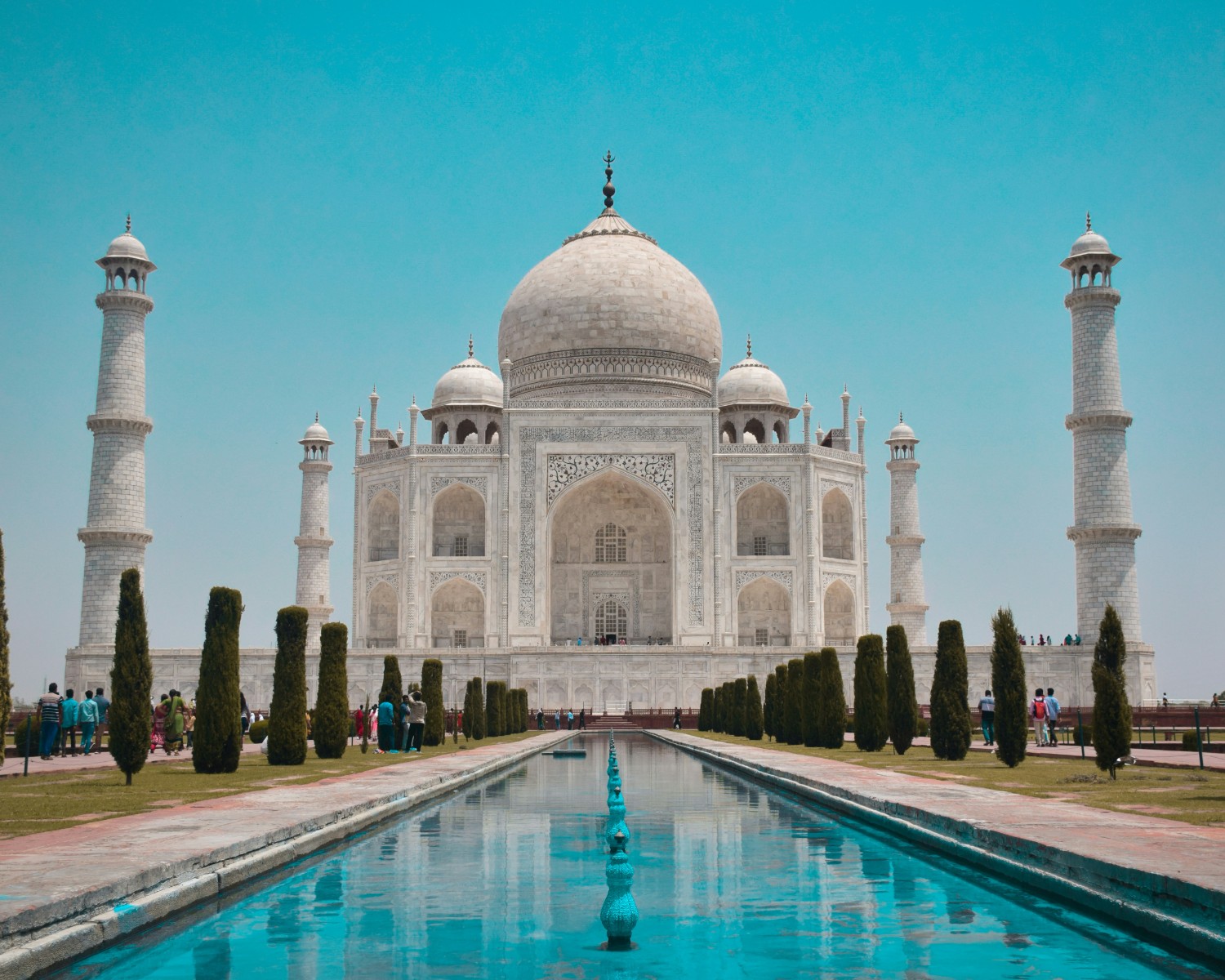
The Golden Triangle is Delhi, Agra and Jaipur. Three cities forming a rough triangle on the map, covering the Mughal capital, the Taj Mahal and the Rajput capital, usually over five to six days. It is India's single most-booked tourist circuit and only one of its three points is in Rajasthan.
Jaipur–Jodhpur–Jaisalmer is a different route entirely — sometimes called the Desert Triangle, and more usually just the classic Rajasthan circuit. It is a longer, harder trip covering three Rajput capitals and the Thar Desert, and it is the better choice if you have already seen the Taj or want Rajasthan rather than a Delhi-and-Agra tour with a Jaipur stop attached.
We sell both. Which is right for you depends on whether you want the Taj Mahal in the itinerary or the desert.
| Golden Triangle | Classic Rajasthan circuit |
Cities | Delhi, Agra, Jaipur | Jaipur, Jodhpur, Jaisalmer |
Duration | 5–6 days | 7–9 days |
Includes the Taj Mahal | Yes | No |
Includes the desert | No | Yes — Sam and Khuri dunes, camel safari, desert camp |
States covered | Delhi, Uttar Pradesh, Rajasthan | Rajasthan only |
Best for | First-time visitors to North India, and anyone who has not seen the Taj | Repeat visitors, heritage travellers, photographers |
Ask about the Golden Triangle →
Rajasthan's UNESCO World Heritage Sites
Rajasthan holds four separate UNESCO World Heritage listings — more than most travellers realise, and more than most operator pages list.
Listing | Inscribed | What it covers |
Hill Forts of Rajasthan | 2013 | A serial site of six forts: Chittorgarh, Kumbhalgarh, Ranthambore, Gagron, Amber (Amer) and Jaisalmer |
Jaipur City | 2019 | The walled city itself — its grid plan, gates, bazaars and pink façades. The city is the heritage site, not just its monuments |
Jantar Mantar, Jaipur | 2010 | The 18th-century astronomical observatory built by Sawai Jai Singh II, with the world's largest stone sundial |
Keoladeo National Park, Bharatpur | 1985 | A wetland and one of the finest bird sanctuaries in Asia, with large wintering populations. Best November to February |
Two corrections worth making, because both are widely repeated. The Hill Forts listing includes six forts, not three — Ranthambore Fort, Gagron and Jaisalmer are routinely left off. And Jaipur City as a whole was inscribed in 2019, which is a significant and fairly recent addition that most Rajasthan itineraries do not mention at all.
On Kumbhalgarh: it has the longest fort wall in India, running about 36 kilometers and frequently described as the second-longest continuous wall in the world. It is not, however, the largest fort in India — that is Chittorgarh, which covers a far greater area. Both are on the UNESCO list and both are worth visiting; the distinction is just worth getting right.
How long the drives actually take
Rajasthan is India's largest state by area, and its attractions sit hundreds of kilometers apart. These are realistic door-to-door times including a break.
Route | Distance | Realistic driving time |
Delhi → Jaipur | About 280 km | 4.5 to 5 hours |
Jaipur → Agra | About 240 km | 4 hours |
Jaipur → Ranthambore (Sawai Madhopur) | About 160 km | 3.5 hours |
Jaipur → Pushkar and Ajmer | About 145 km | 3 hours |
Jaipur → Jodhpur | About 340 km | 5.5 to 6 hours |
Jodhpur → Jaisalmer | About 285 km | 5 hours |
Jodhpur → Kumbhalgarh | About 160 km | 3.5 hours |
Kumbhalgarh → Udaipur | About 85 km | 2 hours |
Udaipur → Jodhpur | About 250 km | 4.5 hours |
Jaipur → Udaipur | About 400 km | 7 hours |
Jaisalmer → Bikaner | About 330 km | 5.5 hours |
Udaipur → Chittorgarh | About 115 km | 2.5 hours |
What this means for planning. Rajasthan does not work as a single loop under about ten days. Treat it as three regions: the eastern circuit around Jaipur, Ranthambore, Pushkar and Agra; the desert belt of Jodhpur, Jaisalmer and Bikaner; and the southern lakes and forts around Udaipur, Kumbhalgarh and Chittorgarh.
Use the trains where they help. Jaipur–Jodhpur and Jodhpur–Jaisalmer both have good overnight services that save you a full day of driving and a night's hotel. On a seven-day trip that is a meaningful gain, and we build rail legs in where they genuinely beat the road.
Rajasthan tour package cost
A 4–6 day Rajasthan package costs ₹12,000 to ₹28,000 per person land-only, and ₹20,000 to ₹45,000 per person including return flights. Palace hotel and luxury desert camp itineraries run considerably higher.
Component | Typical range (per person) | What moves the number |
Flight or train | ₹5,000 – ₹18,000 | Delhi to Jaipur is short and cheap. Bengaluru and Chennai cost more. Overnight trains from Delhi and Mumbai are far cheaper and cost a night rather than a day |
Hotels, 4–6 nights | ₹8,000 – ₹30,000 | Rajasthan has the widest accommodation range in India — ₹2,000 guesthouses to ₹40,000 palace hotels. This is the biggest single variable |
Car with driver | ₹18,000 – ₹35,000 per vehicle | Quoted per vehicle for the whole circuit, not per person. Rajasthan's distances make this a larger line than in most states |
Monument entry tickets | ₹2,000 – ₹5,000 | Amber, Mehrangarh, City Palace Udaipur, Jantar Mantar, Chittorgarh, Kumbhalgarh. Individually modest, cumulatively real |
Guides | ₹1,500 – ₹4,000 | Worth it at Amber, Mehrangarh and Chittorgarh, where the history is the point and there is little signage |
Ranthambore safaris | ₹1,500 – ₹6,000 per safari | Shared Canter at the low end, private Gypsy at the top. Must be booked well in advance |
Desert camp and camel safari | ₹2,500 – ₹15,000 | A basic Sam dunes camp against a luxury tented resort at Khuri or Sam. Enormous range |
Meals beyond breakfast | ₹600 – ₹1,800 per day | Local thalis at the low end, heritage-hotel dining at the high end |
The car is the line people misread, as in any large state. It is quoted per vehicle for the whole circuit rather than per person per day, so Rajasthan works out substantially cheaper per head for a family of four than the per-person headline suggests.
Rajasthan package price by travel style
Travel style | Duration | What's included | Per person, land only |
Budget | 4–5 days | 3-star hotels, breakfast, car with driver, Jaipur and Jodhpur sightseeing with entry tickets | ₹12,000 – ₹18,000 |
Budget–mid | 5–6 days | 3–4 star mix, some meals, a desert camp night or Udaipur added, guides at the major forts | ₹18,000 – ₹28,000 |
Mid-range | 6–8 days | 4-star and heritage hotels, Jaisalmer desert camp, Ranthambore safaris, private transfers | ₹28,000 – ₹42,000 |
Premium / palace | 7–10 days | Palace and boutique heritage hotels, luxury desert camp, private guides, curated experiences | ₹50,000 – ₹1,00,000+ |
Prices are indicative for 2026 and move sharply with season. October to March is peak, and Pushkar Camel Fair week, Christmas and New Year cost substantially more. We quote hotels, the car, entry tickets and safaris as separate lines.
Get a fixed price for your dates →
Popular Rajasthan itineraries
Five routes cover almost every Rajasthan booking we handle. Which one is right depends less on budget than on how many days you genuinely have.
Jaipur and Jodhpur — 5 Days / 4 Nights
From ₹12,000 per person (land only) · Best for a first Rajasthan trip on limited leave
Two Rajput capitals, one road leg, and the two best forts in the state. The right choice if you have under a week.
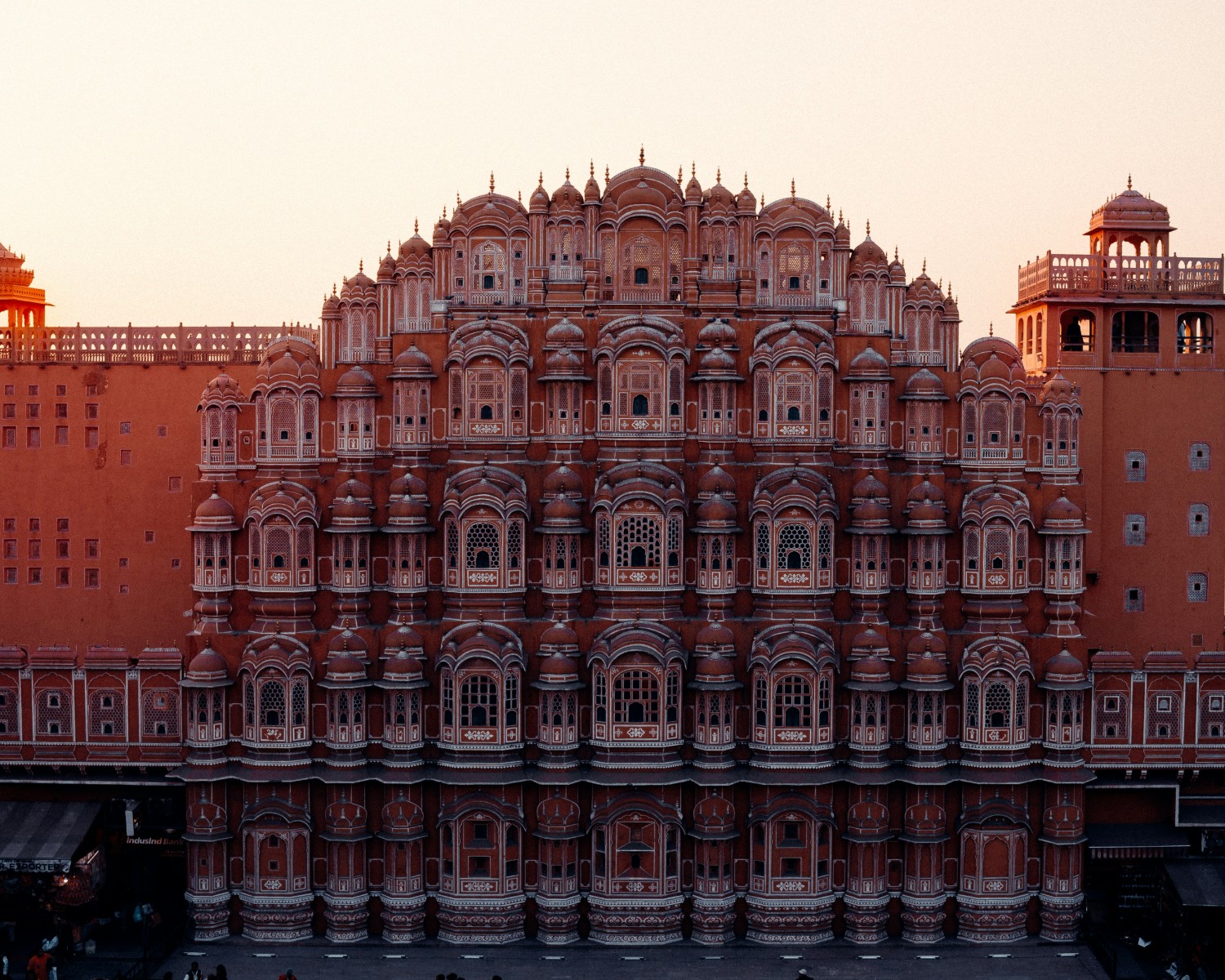
• Day 1 — Arrive Jaipur, City Palace, Jantar Mantar, and Hawa Mahal from the street opposite, which is the view worth having
• Day 2 — Amber Fort in the morning, then Jal Mahal, Nahargarh Fort for sunset over the city, and the bazaars of the walled city
• Day 3 — Drive or take the train to Jodhpur (about 5.5 to 6 hours by road)
• Day 4 — Mehrangarh Fort, Jaswant Thada, the blue lanes below the fort, and a Bishnoi village safari in the afternoon
• Day 5 — Departure from Jodhpur, or return to Jaipur
Mehrangarh is the best fort in Rajasthan, and this is not a close call. It rises straight out of the rock above the blue city, the museum inside is genuinely well curated, and the audio guide is one of the best at any Indian monument. Give it a full morning rather than two hours.
Jaipur, Jodhpur and Jaisalmer — 7 to 9 Days
From ₹22,000 per person (land only) · Best for the full desert circuit
The classic Rajasthan route, sometimes called the Desert Triangle. Three Rajput capitals and a night in the Thar.
• Days 1–2 — Jaipur: Amber Fort, City Palace, Jantar Mantar, Nahargarh, the walled city bazaars
• Day 3 — Jodhpur (road or overnight train)
• Day 4 — Mehrangarh Fort, Jaswant Thada, the blue city, Bishnoi villages
• Day 5 — Jaisalmer (about 5 hours), with Patwon Ki Haveli and the golden-sandstone lanes of the living fort
• Day 6 — Sam or Khuri dunes: camel safari at sunset, folk music and an overnight desert camp
• Days 7–9 — Gadisar Lake, Bada Bagh cenotaphs, and departure — or continue to Bikaner and Mandawa's painted havelis
On the desert camp: Sam is closer to Jaisalmer, larger and considerably busier, with camps set close together and amplified music. Khuri is quieter, further out and better for anyone who actually wants the silence of the desert. For honeymooners and photographers we recommend Khuri; for families wanting the full spectacle, Sam works.
On staying inside Jaisalmer Fort: it is one of very few inhabited forts in the world, with several thousand residents, and staying inside is romantic. It is also contested — water and sewage from guesthouses inside the walls have been linked to structural damage to the fort's foundations, and conservation bodies discourage it. We will book you a haveli hotel with a fort view instead, and explain why.
Udaipur, Kumbhalgarh and Chittorgarh — 4 to 5 Days
From ₹16,000 per person (land only) · Best for honeymooners and heritage travellers
Southern Rajasthan, and a completely different landscape from the desert — hills, lakes and the two greatest Rajput forts.
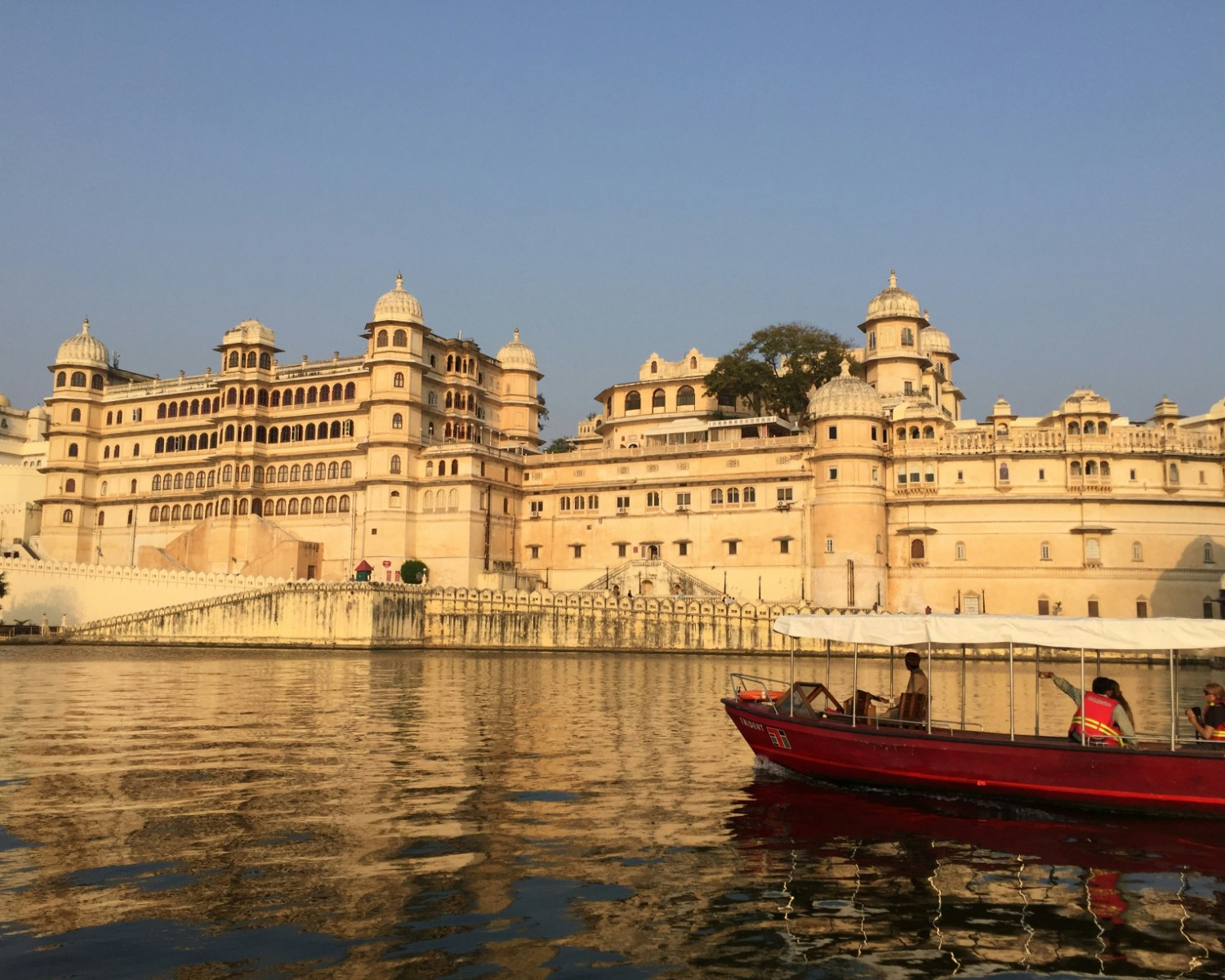
• Days 1–2 — Udaipur: City Palace, Jagdish Temple, Saheliyon Ki Bari, a boat on Lake Pichola to Jag Mandir, and sunset from Ambrai Ghat or the Monsoon Palace
• Day 3 — Kumbhalgarh: the 36-kilometre wall and the Badal Mahal at the summit, plus the Jain temple complex at Ranakpur an hour away
• Day 4 — Chittorgarh: the largest fort in India by area, with the Vijay Stambh, Rana Kumbha's palace and the Padmini palace
• Day 5 — Return to Udaipur and depart
A note on the Lake Palace. The Taj Lake Palace on Lake Pichola is a working luxury hotel, not a monument — you cannot visit it unless you are staying there or have a confirmed dining reservation. Many itineraries imply otherwise and travellers arrive expecting a tour. Jag Mandir, the other island palace, is open to visitors by boat and is genuinely worth the trip.
Ranakpur is under-sold. The 15th-century Jain temple has 1,444 carved marble pillars, no two alike, and is one of the most extraordinary interiors in India. It sits directly between Kumbhalgarh and Udaipur and costs you nothing extra in driving.
Rajasthan with Ranthambore — 6 to 8 Days
From ₹28,000 per person (land only) · Best for families and wildlife travellers
Adds India's most accessible tiger reserve to a Jaipur-based itinerary. Ranthambore has among the highest tiger-sighting rates of any Indian park, largely because the terrain is open and the tigers are habituated to vehicles.
• Days 1–2 — Jaipur sightseeing
• Day 3 — Drive to Sawai Madhopur (about 3.5 hours), afternoon safari
• Day 4 — Morning and afternoon safaris in different zones, plus Ranthambore Fort inside the park — itself a UNESCO-listed hill fort
• Days 5–8 — Continue to Jodhpur and the desert, or south to Udaipur
How Ranthambore safaris actually work, because this catches people out. The park is divided into numbered zones and you are allocated a zone, not permitted to choose one. Bookings open well in advance through the forest department and the popular zones fill fast. You can book a shared Canter, which is a 20-seat open truck, or a six-seat Gypsy, which costs more and is far better for photography.
Book two or three safaris, not one. Sightings are not guaranteed, and a single drive in an unlucky zone is how people leave disappointed. Two safaris in different zones materially improves your odds.
The park's core zones close from 1 July to 30 September for the monsoon. Some buffer zones remain open, but if tigers are your reason for travelling, come between October and April — and note that April to June, though brutally hot, gives the best sightings as animals concentrate at waterholes.
The Golden Triangle — Delhi, Agra and Jaipur — 5 to 6 Days
From ₹18,000 per person (land only) · Best for first-time North India travellers
India's most-booked circuit, and the right choice if you have not seen the Taj Mahal.
• Days 1–2 — Delhi: Qutub Minar, Humayun's Tomb, Red Fort, Jama Masjid and Old Delhi
• Day 3 — Agra (about 3.5 hours by expressway): the Taj Mahal at sunrise, Agra Fort, and Mehtab Bagh across the river at sunset
• Day 4 — Drive to Jaipur (about 4 hours) via Fatehpur Sikri, the abandoned Mughal capital
• Days 5–6 — Jaipur: Amber Fort, City Palace, Jantar Mantar, Hawa Mahal, and departure
The Taj is closed on Fridays. Plan around it, and go at sunrise rather than mid-morning — the light is better, the crowds are a fraction, and the heat is bearable. This single decision changes the day more than anything else on the itinerary.
Plan a Golden Triangle trip →
Rajasthan packages from your city
Rajasthan has five airports with scheduled service and some of the best rail connectivity in India, which gives you real choice about how you arrive.
From | Approx. flight time to Jaipur |
Delhi | About 1 hour — or 4.5 to 5 hours by road, which many travellers prefer |
Ahmedabad | About 1 hour 15 minutes |
Mumbai | About 1 hour 50 minutes |
Hyderabad | About 2 hours |
Kolkata | About 2 hours 15 minutes |
Bengaluru | About 2 hours 40 minutes |
Chennai | About 2 hours 45 minutes |
Pune | About 2 hours |
Rajasthan packages from Bangalore
About two hours forty minutes to Jaipur, with daily direct service, and direct flights to Udaipur on some carriers. Bengaluru is Bayard's home base and one of our strongest Rajasthan markets. Given the flight time and cost from South India, we would generally recommend a minimum of six days — a compressed four-day Rajasthan trip from Bengaluru spends too much of the holiday in transit.
Flying into one city and out of another is usually worth it. Jaipur in, Udaipur or Jodhpur out removes a long backtracking drive at the end of the trip. Open-jaw fares from Bengaluru are often barely more than a return, and it saves a full day.
Rajasthan packages from Chennai, Hyderabad and Kochi
Hyderabad is about two hours to Jaipur with daily direct service. Chennai is around two hours forty-five. Kochi generally connects through Bengaluru, Mumbai or Delhi. As with Bengaluru, plan six days or more from South India, and consider an open-jaw routing.
Rajasthan packages from Delhi, Mumbai and Ahmedabad
The shortest approaches. Delhi to Jaipur is an hour by air or under five by road, which makes a three or four-day Rajasthan break genuinely practical. Mumbai and Ahmedabad both have direct service to Jaipur and Udaipur. Overnight trains from Delhi and Mumbai are excellent on these routes — comfortable, considerably cheaper, and they cost you a night rather than a day.
Who Rajasthan suits best
Rajasthan for honeymoons
Udaipur is the honeymoon destination, and it earns the reputation — lake-facing heritage hotels, boat rides at sunset, and a compactness that means you are not driving every day. A five to six-day Udaipur, Kumbhalgarh and Ranakpur route with a heritage property runs ₹50,000 to ₹1,00,000 per person at the premium end. Add a quiet desert camp at Khuri if you want two contrasting halves.
Rajasthan for families
Strong, with one caveat. Forts, camel rides, tiger safaris and puppet shows hold children well, and Rajasthani hotels are used to families and extra beds. The caveat is the driving — a seven-day itinerary with five bases is hard on young children. Two or three bases, longer stays, and the overnight trains where they help.
Rajasthan for photographers
Arguably the most photogenic state in India. Mehrangarh above the blue city, the Hawa Mahal in early light, Jaisalmer's sandstone at sunset, Chittorgarh's scale, the Pushkar fair, and Bishnoi villages. Come in the cooler months for workable daytime light, and build in early starts — almost everything here is better before nine in the morning.
Rajasthan for senior travellers
Manageable with planning. What needs thinking about is the forts — Amber, Mehrangarh, Kumbhalgarh and Chittorgarh all involve significant walking on uneven stone, often uphill. Lifts exist at Mehrangarh and vehicles can go partway up at Amber. Udaipur is the gentlest base in the state, and a lakes-and-southern-forts itinerary is usually the better choice than the desert circuit.
Best time to visit Rajasthan
October to March, and in Rajasthan this is less a preference than a practical necessity. The summer here is among the most severe in India.
Period | What it's like | Verdict |
October – November | Warm days, cool evenings, post-monsoon greenery still visible. Pushkar Camel Fair in November | Excellent, and increasingly the peak. Book 8–10 weeks ahead |
December – January | Cool to genuinely cold, with desert nights near freezing at Jaisalmer and Bikaner. Clear skies | Best for fort walking. Pack far more warmly than most people expect for a desert state |
February – March | Warming, comfortable, fewer crowds than December. Jaisalmer Desert Festival in February | The best balance of weather, crowds and price |
April – June | Extreme heat, regularly above 45°C in the desert. Fort sightseeing is genuinely unpleasant and can be unsafe | Avoid, unless you are going to Ranthambore specifically for tiger sightings |
July – September | Monsoon. Rain is modest by Indian standards, the landscape greens, and rates are lowest. Ranthambore's core zones close | Underrated for Udaipur and the south. Poor for the desert |
Desert nights are cold — this catches everyone out
Travellers arriving from South India in December routinely pack for a desert and find Jaisalmer at four or five degrees after dark. The Thar has an enormous diurnal range: a pleasant 25°C afternoon becomes a near-freezing night. If you are doing a desert camp between November and February, you need a proper jacket, not a shawl.
Festivals worth planning around
• Pushkar Camel Fair — held around Kartik Purnima in November at Pushkar, near Ajmer. Thousands of camels and horses, trading, races and a vast temporary tent city. Genuinely one of the great spectacles in India, and Pushkar and Ajmer hotels sell out months ahead at multiples of normal rates. This, not Jaisalmer, is the camel fair — a common confusion
• Jaisalmer Desert Festival — usually February, in and around Jaisalmer and the Sam dunes. Folk music, turban-tying competitions, camel polo and processions
• Teej in Jaipur, in the monsoon months, and Gangaur in March or April, both with major processions through the walled city
• The Mewar Festival in Udaipur, around Gangaur, with boat processions on Lake Pichola
Festival dates follow the Hindu calendar and shift each year. Tell us if you want to attend one and we will confirm the current year's dates and book early enough to matter.
Where to go in Rajasthan
Jaipur
The Pink City, the state capital, and since 2019 a UNESCO World Heritage Site in its own right — the walled city's 18th-century grid plan is the listed asset. Amber Fort with its Sheesh Mahal; the City Palace; Jantar Mantar's giant stone instruments; Hawa Mahal's honeycomb façade; Nahargarh and Jaigarh above the city; and the bazaars of Johari, Bapu and Tripolia for gemstones, textiles and blue pottery.
On the Amber Fort elephant rides: they are limited in number, run mornings only, and are increasingly contested on welfare grounds. Jeeps cover the same climb, and you can walk it in about fifteen minutes. We do not include elephant rides by default and will say so if you ask.
Jodhpur
The Blue City, below the vast bulk of Mehrangarh Fort — the finest fort in Rajasthan and one of the best-presented monuments in India. Also Jaswant Thada's marble cenotaph, the Umaid Bhawan Palace, Toorji Ka Jhalra stepwell, and the Bishnoi villages outside town, where a jeep safari gives you blackbuck, weaving and a genuine rural afternoon rather than a staged one.
Jaisalmer
The Golden City, rising out of the Thar in yellow sandstone. The living fort, still home to several thousand residents; Patwon Ki Haveli and Salim Singh Ki Haveli; Gadisar Lake; the Bada Bagh cenotaphs at sunset; and the Sam and Khuri dunes for camel safaris and desert camps. Kuldhara, the abandoned village outside town, is worth the half hour.
Udaipur
The City of Lakes, and the softest, greenest and most walkable place in Rajasthan. The City Palace complex on Lake Pichola; Jagdish Temple; Saheliyon Ki Bari; a boat to Jag Mandir; the Monsoon Palace for sunset; and Bagore Ki Haveli's evening folk performance, which is one of the few tourist shows in India genuinely worth attending.
Kumbhalgarh, Ranakpur and Chittorgarh
Southern Rajasthan's fort country. Kumbhalgarh's 36-kilometre wall winds over the hills to the Badal Mahal at the summit. Ranakpur's 15th-century Jain temple has 1,444 individually carved marble pillars. Chittorgarh is the largest fort in India by area, with the Vijay Stambh tower and a history that runs deeper and darker than anywhere else in the state.
Ranthambore and Keoladeo
Ranthambore is India's most accessible tiger reserve, with open terrain, high sighting rates, and a UNESCO-listed hill fort inside the park. Keoladeo National Park at Bharatpur, near Agra, is a UNESCO-listed wetland and one of Asia's great bird sanctuaries, best from November to February and easily added to a Golden Triangle route.
Pushkar, Bikaner and Mandawa
Pushkar has one of the very few Brahma temples in the world, a sacred lake with fifty-two ghats, and November's camel fair. Bikaner offers Junagarh Fort, the camel breeding farm and the Karni Mata temple. Mandawa and the Shekhawati region hold hundreds of painted merchant havelis, sometimes called the world's largest open-air art gallery, and almost nobody includes them.
What's included in a Bayard Rajasthan package
Included
• Hotel stays in Jaipur, Jodhpur, Jaisalmer, Udaipur, Kumbhalgarh, Pushkar or Ranthambore as per your route
• Daily breakfast, with dinner on desert camps and additional meals on premium itineraries
• Air-conditioned car with driver for the entire circuit, including all transfers
• Airport or railway station pickup and drop, and rail bookings where the itinerary uses them
• Monument entry tickets — Amber, Mehrangarh, City Palace Udaipur, Jantar Mantar, Kumbhalgarh, Chittorgarh
• Licensed guides at the major forts, where the history genuinely needs explaining
• Camel safari and desert camp night at Sam or Khuri where included
• Ranthambore safaris, booked in advance in your chosen vehicle category
• On-trip assistance and local coordination
Not included
• Flights or train fares, unless you have asked us to bundle them
• Camera and video fees, charged separately at several monuments
• Elephant rides at Amber Fort — see our note above
• Optional activities: hot air balloon rides, additional safaris, private folk performances, vintage car tours
• Travel insurance
• Personal expenses: shopping, tips, minibar and laundry
Practical things worth knowing
Food
Rajasthani cuisine developed in a desert with scarce water and few fresh vegetables, which is why it leans on lentils, dried ingredients, ghee and preserved food. Dal baati churma is the signature dish — baked wheat balls with lentils and a sweet crumbled wheat mixture. Alongside it: gatte ki sabzi, gram-flour dumplings in yoghurt curry; ker sangri, a desert bean and berry preparation; laal maas, a fiery mutton curry; and pyaaz kachori and mirchi vada as street food.
Rajasthan is one of the easiest states in India for vegetarians — much of the classic cuisine is vegetarian by default, and Jain food is widely available and properly understood. Say so at booking and it will be handled without fuss.
Shopping — and how not to overpay
Rajasthan's crafts are exceptional and the commission culture around them is aggressive. Blue pottery and gemstones in Jaipur, bandhani and leather in Jodhpur, embroidery and mirror work in Jaisalmer, miniature painting in Udaipur. Drivers and guides in Rajasthan frequently earn commission on shop visits, which is why unrequested detours to emporiums happen. We do not take shop commissions, which means we can tell you honestly where to buy and our drivers have no reason to divert you.
On gemstones specifically: Jaipur is a genuine global centre for coloured stone cutting, and it is also where a great many tourists are sold worthless stones with fake certification. Buy from established, government-recognised dealers or do not buy at all.
Forts, walking and heat
Every major fort in Rajasthan involves substantial walking on uneven stone, usually uphill and usually without shade. Start early — most forts open around 9am and the difference between 9am and noon in March is considerable. Carry water, wear proper shoes rather than sandals, and budget more time per fort than the itinerary suggests.
Money, connectivity and what to pack
Cards and UPI work almost everywhere, including small shops. Carry cash for village stops, camel handlers and tips. Connectivity is good across the state and thins only in the deep desert around Sam and Khuri.
Pack sun protection whatever the month, layers for the desert nights between November and February, comfortable closed walking shoes, and something modest for temples. A scarf is genuinely useful — for sun, for dust, and for covering your head at religious sites.
Why book Rajasthan with Bayard Vacations
Rajasthan is the most commoditized destination in Indian domestic travel, and the itineraries that sell best are the ones that cram five cities into six days. They are also the ones travellers come back exhausted from.
• Realistic drive times, published upfront. Jaipur to Jaisalmer is eleven hours of road. We would rather talk you into fewer bases than sell you a route that looks impressive on paper.
• Trains used where they beat the road. The overnight services between Jaipur, Jodhpur and Jaisalmer save you a full day and a hotel night.
• Ranthambore safaris booked properly — multiple drives, different zones, and an honest explanation of how zone allocation works before you book.
• No shop commissions. Our drivers have no financial reason to detour you to an emporium, which in Rajasthan is not a small thing.
• Seasonal honesty. We will tell you that a June fort itinerary is a bad idea, and that desert nights in December are genuinely cold.
• Open-jaw routings from South India, so you fly into Jaipur and out of Udaipur rather than losing a day backtracking.
Talk to a Rajasthan specialist →
Rajasthan package FAQs
How much does a Rajasthan tour package cost?
A 4–6 day Rajasthan package costs ₹12,000 to ₹28,000 per person land-only, or ₹20,000 to ₹45,000 per person including return flights. Palace hotel and luxury desert camp itineraries run ₹50,000 to ₹1,00,000 and above per person.
What is the Golden Triangle in India?
Delhi, Agra and Jaipur — three cities forming a rough triangle, usually covered in five to six days, taking in the Mughal capital, the Taj Mahal and the Rajput capital. Only Jaipur is in Rajasthan. Jaipur–Jodhpur–Jaisalmer is a different route, sometimes called the Desert Triangle.
How many days do you need for Rajasthan?
Four to five days covers Jaipur and Jodhpur, or Udaipur and Kumbhalgarh. Seven to nine days covers Jaipur, Jodhpur and Jaisalmer with a desert night. Ten days or more to combine the desert with the southern lakes and Ranthambore.
How many UNESCO sites does Rajasthan have?
Four listings. The Hill Forts of Rajasthan, a serial site of six forts inscribed in 2013; Jaipur City, inscribed in 2019; Jantar Mantar in Jaipur, 2010; and Keoladeo National Park at Bharatpur, 1985.
Which are the six UNESCO Hill Forts of Rajasthan?
Chittorgarh, Kumbhalgarh, Ranthambore, Gagron, Amber (Amer) and Jaisalmer, inscribed together as a serial site in 2013. Many itineraries list only Amber, Chittorgarh and Kumbhalgarh and leave out the other three.
Which is the largest fort in India?
Chittorgarh, by area. Kumbhalgarh has the longest fort wall in India at about 36 kilometres, often described as the second-longest continuous wall in the world, but Chittorgarh covers the greater area. Both are UNESCO-listed.
What is the best time to visit Rajasthan?
October to March. February and March give the best balance of weather, crowds and price. April to June regularly exceeds 45°C in the desert and makes fort sightseeing genuinely unpleasant. July to September is monsoon, which suits Udaipur and the south.
Can I visit the Lake Palace in Udaipur?
No, unless you are staying there or have a confirmed dining reservation — the Taj Lake Palace is a working luxury hotel, not a monument. Jag Mandir, the other island palace on Lake Pichola, is open to visitors by boat and is well worth the trip.
How do Ranthambore safaris work?
The park is divided into numbered zones and you are allocated a zone rather than choosing one. Book well in advance through the forest department, in either a shared 20-seat Canter or a six-seat Gypsy. Book two or three safaris in different zones, not one.
When is Ranthambore closed?
The core zones close from 1 July to 30 September for the monsoon, though some buffer zones stay open. October to April is the main season. April to June gives the best sightings as animals gather at waterholes, but the heat is extreme.
Where is the camel fair in Rajasthan?
Pushkar, near Ajmer, around Kartik Purnima in November. It is one of the great spectacles in India, with thousands of camels and horses. Jaisalmer holds a separate Desert Festival, usually in February — the two are frequently confused.
Should I stay inside Jaisalmer Fort?
We would suggest not. It is one of very few inhabited forts in the world and staying inside is romantic, but water and sewage from guesthouses within the walls have been linked to damage to the foundations. A haveli hotel with a fort view is the better choice.
Sam or Khuri for a desert camp?
Sam is closer to Jaisalmer, larger and much busier, with camps close together and amplified music. Khuri is quieter and further out, and better if you actually want the silence of the desert. Khuri for couples and photographers; Sam for families wanting the spectacle.
Are elephant rides at Amber Fort included?
Not by default. They are limited in number, run mornings only, and are increasingly contested on welfare grounds. Jeeps cover the same climb and the walk up takes about fifteen minutes. We will discuss it with you rather than including it automatically.
How cold does Rajasthan get in winter?
Colder than most travellers expect. The Thar has a large daily temperature range, and desert nights at Jaisalmer and Bikaner can approach freezing in December and January while afternoons are pleasant. A proper jacket is needed for a winter desert camp.
Is Rajasthan good for vegetarians?
One of the easiest states in India. Much of the classic cuisine — dal baati churma, gatte ki sabzi, ker sangri — is vegetarian by default, and Jain food is widely available and properly understood. Tell us at booking and it will be handled.
What is included in a Bayard Rajasthan package?
Hotels, daily breakfast, an air-conditioned car with driver for the whole circuit, all transfers, monument entry tickets, licensed guides at the major forts, camel safari and desert camp where included, and pre-booked Ranthambore safaris. Flights and train fares are quoted separately.
How far in advance should I book a Rajasthan trip?
Six to eight weeks for most dates. Ten to twelve weeks for October to December, for Pushkar Camel Fair week, and for Christmas and New Year, when palace and heritage hotels and Ranthambore safari slots sell out first.
Planning a Rajasthan trip? Tell us your city, your dates and how many days you actually have. We will send back a costed itinerary paced for the distances Rajasthan involves — and if the route you have in mind means five hotels in six days, we will say so.
Enquire now · WhatsApp · Call
Rajasthan Packages


Signature Collections
Handpicked signatures and top-rated escapes in Rajasthan

We Are Bayard Vacations
Not just another travel company. We're dreamweavers, adventure architects, and memory makers.
Explore

Meet Bayard Buddy – Advanced AI Chatbot for Everyday Help
Travel Stories & Tips
Get inspired for your next adventure to Rajasthan


.png&w=2560&q=75)
Guest Stories
Join 25,000+ happy travelers who explored Rajasthan with us.
You Might Also Like
Discover more incredible destinations and experiences tailored for you


